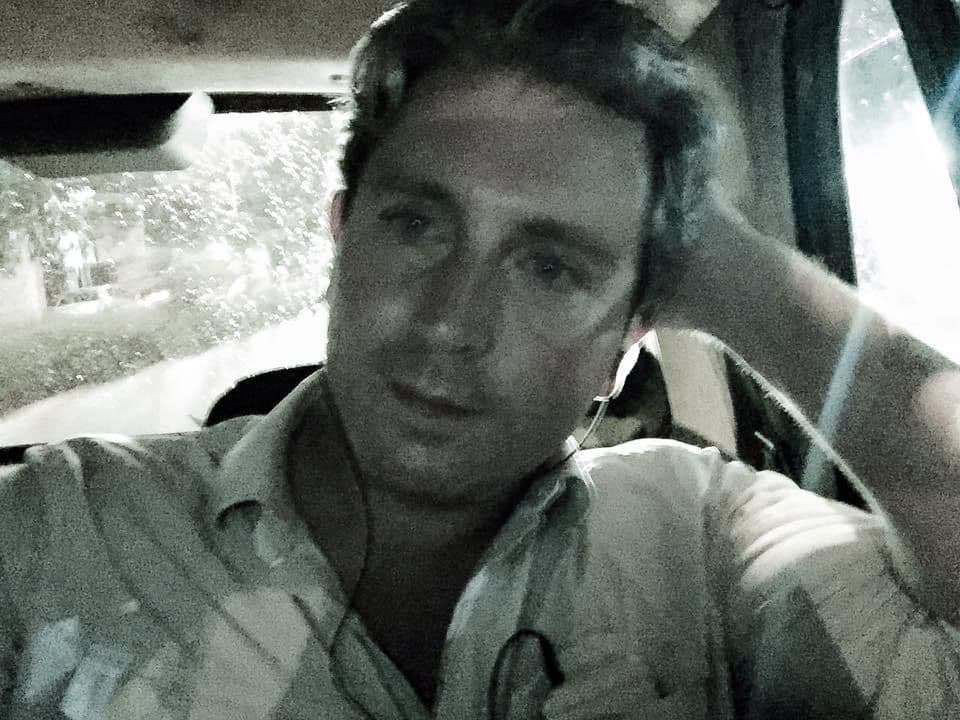
I've been coming to the Emirates for years now. Often enough that the airport feels procedural rather than exciting. The same skyline, slightly altered each visit. The same dry heat stepping off the plane. A country that exists online as spectacle but in reality feels orderly, deliberate, almost careful.
I know which road to take into the city. I know how the light looks in late afternoon. It has started to feel ordinary in a way that would probably surprise people who only know it from the internet.
Last Thursday I nearly posted something online. At traffic lights officials were handing out food and drinks to people fasting for Ramadan. It seemed quietly kind. Organised. No one making a spectacle of it. I drafted something about how you don't see that everywhere. Then I didn't post it. It felt unnecessary.
On Friday I drove to Abu Dhabi before sunrise. The traffic can become oppressive if you leave too late and I prefer the roads when they're empty. I had a meeting at the private office Sheikh Mansour. We've been negotiating for months. The deal is to build AI systems. We agreed and everyone seemed satisfied.
Driving back I remember feeling not triumphant exactly just relieved that I'm working with the Royal Family in Abu Dhabi and the rulers of the UAE. I might have even whistled a tune on my drive back to Dubai.
The first explosion didn't immediately register as danger.
There's always construction somewhere. It's a country that builds constantly. But the sound was wrong. It lingered. The sound could have been anything. But there was a density to it. A finality. Then another.
By the time I reached Dubai the sky had changed character. Interceptions streaked overhead, brief violent flashes opening and disappearing. Missiles were being neutralised mid air. From my hotel window I watched technology undo technology. It was beautiful in a way that felt morally confusing. Small blooms of light then darkness again. It looked almost abstract from that distance. Clean. Precise. It's strange how something can be both terrifying and technically impressive at the same time.
I didn't sleep much. Every sound felt amplified.
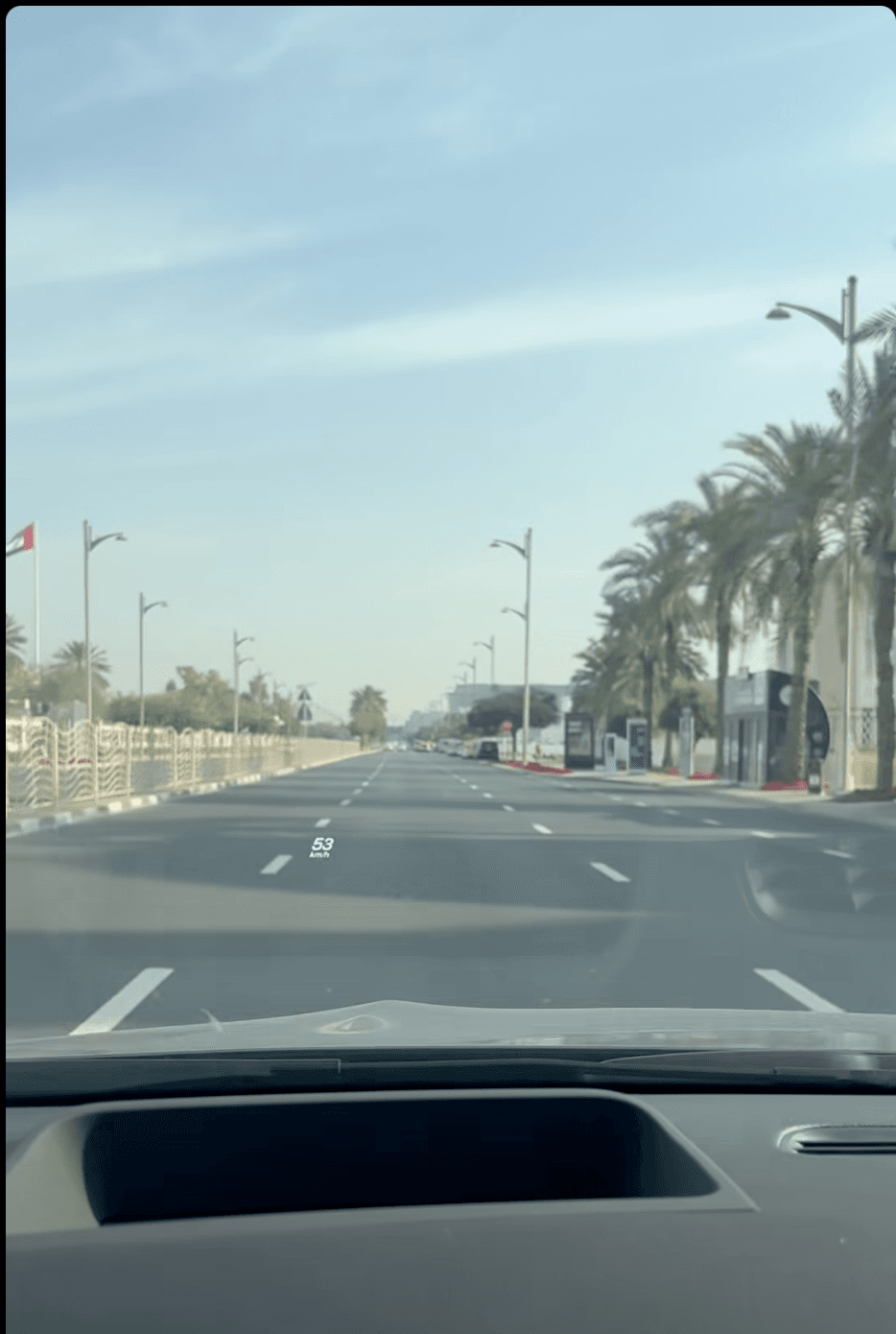
The next morning I drove toward Oman. I'm not sure why. It felt like the practical thing to do. At the border they told me I needed a yellow slip to cross in a rental car. The phrase sounded bureaucratic in a way that felt absurd given the circumstances. I turned around.
Driving back into Dubai I saw smoke rising in different places. People online were already describing it as collapse. Collapse of Dubai, of the Middle East. But the roads were still functioning. Cafés were open. Traffic lights still changed on schedule. The disconnect between what was happening and how it was being narrated felt extreme but that's influencers for you, looking for that click bait and another thousand followers.
Saturday evening I didn't go to City Walk, though I usually pass through in the evenings to Urth Cafe an American diner I love in Los Angeles that popped up in Dubai. Later I learned debris had fallen there and started a fire. The sail shaped outline of Burj Al Arab had been struck by fragments from a destroyed drone. The same at the Fairmont Hotel on Jumeriah just down the road from my hotel. The images online made it look catastrophic. In reality it seemed contained.
"I kept thinking about proximity. How small decisions alter outcomes. Leaving five minutes earlier. Choosing one street instead of another."
Early Sunday morning I tried the airport to see if I could pick up a yellow slip from the rental car company. It was empty. It had been bombed twice the day before so that was fair. Counters unattended. Screens filled with cancellations, car rentals shut up shop. When I drove away two interceptions exploded very close overhead. I felt stupid for not thinking that I was driving into a target. The car shook hard enough to make me grip the wheel and move off the road. I felt embarrassed by how quickly panic rose in me. As if fear were a failure of composure.
I quickly drove toward the Hatta mountains. I'm sure there's speeding tickets to be addressed but they might have some lenience with me when they see the time and place. The East coast of the country felt safer, though I had no evidence for this seeing as it's closer to Iran. The roads were mostly empty except for a few convoys of expensive cars and security moving quickly and quietly. Wealth relocating itself. They had the same idea. I was baffled why people would stay in Dubai with hundreds of missiles piling down on it.
Friends messaged with suggestions. A bus to Muscat. A private jet via Saudi Arabia. Cyprus. I drove back to Dubai to explore the options but they seemed viable for a few minutes before collapsing under logistics. Airspace closures. Full bookings. Unanswered calls. Systems I'd assumed were stable turned out to be surprisingly fragile.
Sunday night the bombing continued. Not constant but enough to prevent rest. Enough to keep the sky closed.
I rebooked a flight for Tuesday morning. It was cancelled hours later. I registered with the Irish embassy and received no reply. There's a specific kind of loneliness in being abroad during instability. You're physically surrounded by people but structurally alone.
Now the plan is simple in theory, cross into Oman or travel toward Riyadh. I've booked a backup flight to Geneva on Friday assuming the airspace reopens. For now I'm still here.
What surprises me most isn't the noise. It's how quickly normal life tries to continue around it.
People ordering coffee. Cars stopping at lights. Notifications arriving on my phone as if nothing significant has just shifted. Missiles, the booms the thought that a single missed interception means life or death will stay with me for a long long time.
War I'm realising isn't only destruction. It's uncertainty. It's the quiet recalculation of every plan. And the waiting…